International Pathways

Robotex International

The world's largest chain of autonomous robotics competitions — where Tunisian engineers prove their skills on a global stage in Tallinn, Estonia.

17+ Countries 150,000+ Participants Worldwide Fully Autonomous Robots Tallinn, Estonia

The World's Largest Autonomous Robotics Competition Chain

Founded in 2001 at TalTech University in Tallinn, Estonia, Robotex International has grown into the world's largest network of autonomous robotics competitions — spanning 17+ countries and drawing over 150,000 participants worldwide.

Unlike driver-controlled robotics contests, Robotex demands that every robot operate completely autonomously — no remote control, no human input during the run. Competitors must master embedded programming, sensor integration, and mechanical precision to build machines that think and act on their own.

The flagship event is held annually at Unibet Arena in Tallinn, gathering nearly 3,000 competitors from across Europe, Asia, Africa, and beyond. It is also a key focus event of European Robotics Week (ERW), recognised by industry leaders including Starship Technologies.

Official Website
Robotex International
17+ Countries
150K+ Participants Worldwide
24 Years Running
3,000+ Competitors at Finals

Sending Tunisia's Best Builders to Estonia

ATAST organises Tunisia's national Robotex qualifier — identifying, training, and sending the country's most talented young engineers to compete at Robotex International in Tallinn.

Through ATAST's programme, students gain access to mentorship, technical workshops, and hands-on preparation in autonomous programming. ATAST tracks team performance at local events and selects the strongest competitors to represent Tunisia on the world stage.

For a Tunisian team to stand on the Robotex International arena floor — competing head-to-head with teams from Estonia, Finland, Germany, and beyond — is a milestone that defines a young engineer's career.

Show Interest Learn More
Tunisia Robotex Team

Fully Autonomous. Every Category.

Every Robotex challenge requires robots to act entirely on their own — no remote controls allowed. Competitors choose their category and engineer a machine that can sense, decide, and act independently.

Line Follower

The robot must follow a black line on a white surface as fast as possible. Speed, precision, and sensor tuning are everything — one missed curve and the run is over.

Maze Solver

The robot enters a maze and must find the exit autonomously. Teams use mapping algorithms, distance sensors, and path-planning logic to navigate unknown corridors in minimal time.

Sumo

Two robots enter a circular ring and fight to push each other out — without any driver control. The robot must detect its opponent, react, and dominate the ring on its own.

Fire Fighting

The robot navigates a miniature building, finds a lit candle representing a fire, and extinguishes it — autonomously. Speed and accuracy in locating the flame determine the winner.

Robotex Football

Autonomous robots play a game of football using infrared sensors to locate the ball and vision systems to target the goal. No human intervention — pure machine intelligence on the pitch.

Free Style

Teams showcase original autonomous creations judged on creativity, engineering quality, and real-world relevance. The category that rewards thinking beyond the rulebook.

From Tunisia to Tallinn

ATAST's Robotex programme follows a clear path from local build to international stage — every step designed to develop both the robot and the engineer behind it.

Build & Train

Workshops & mentoring

National Qualifier

ATAST-run selection event

Robotex International

Tallinn, Estonia

  • Students build their robot from scratch — no pre-made kits
  • Autonomous programming is required for every category
  • ATAST provides technical workshops and coaching sessions
  • National qualifier determines who represents Tunisia at the international event
  • Selected teams receive full preparation support before travelling

Why Autonomous Robotics?

Robotex's fully autonomous format pushes students far beyond typical robotics competitions. To build a robot that reacts, decides, and acts without human input requires mastery of embedded C/C++ or Python, sensor fusion, PID control, and real-time decision-making algorithms — skills that translate directly into careers in robotics, AI, and engineering.

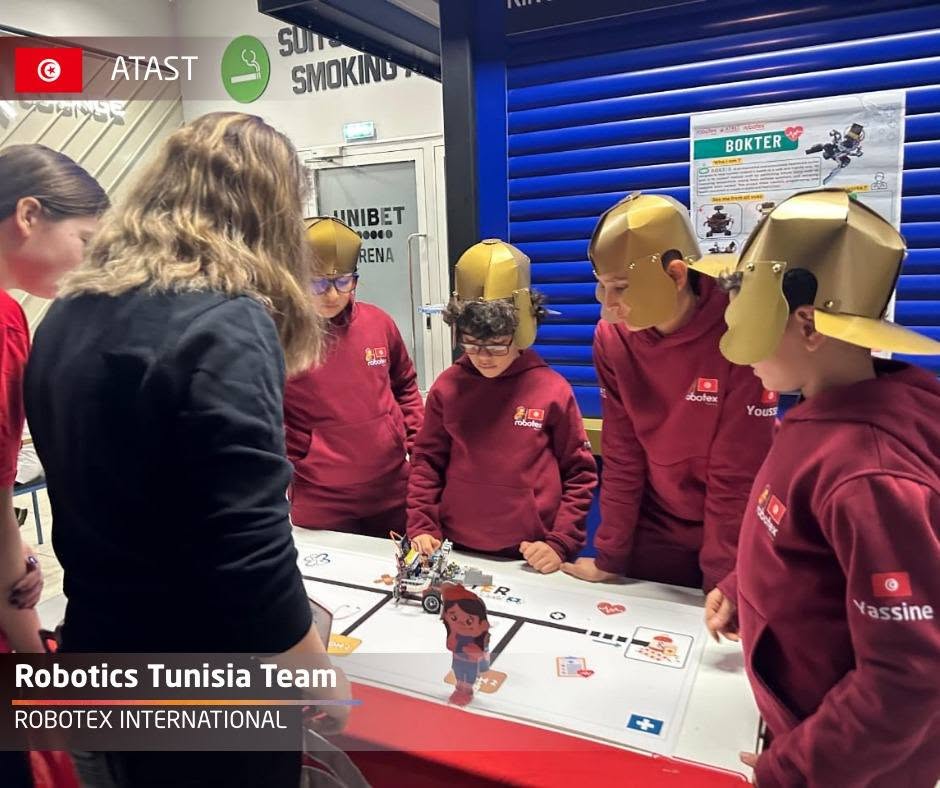
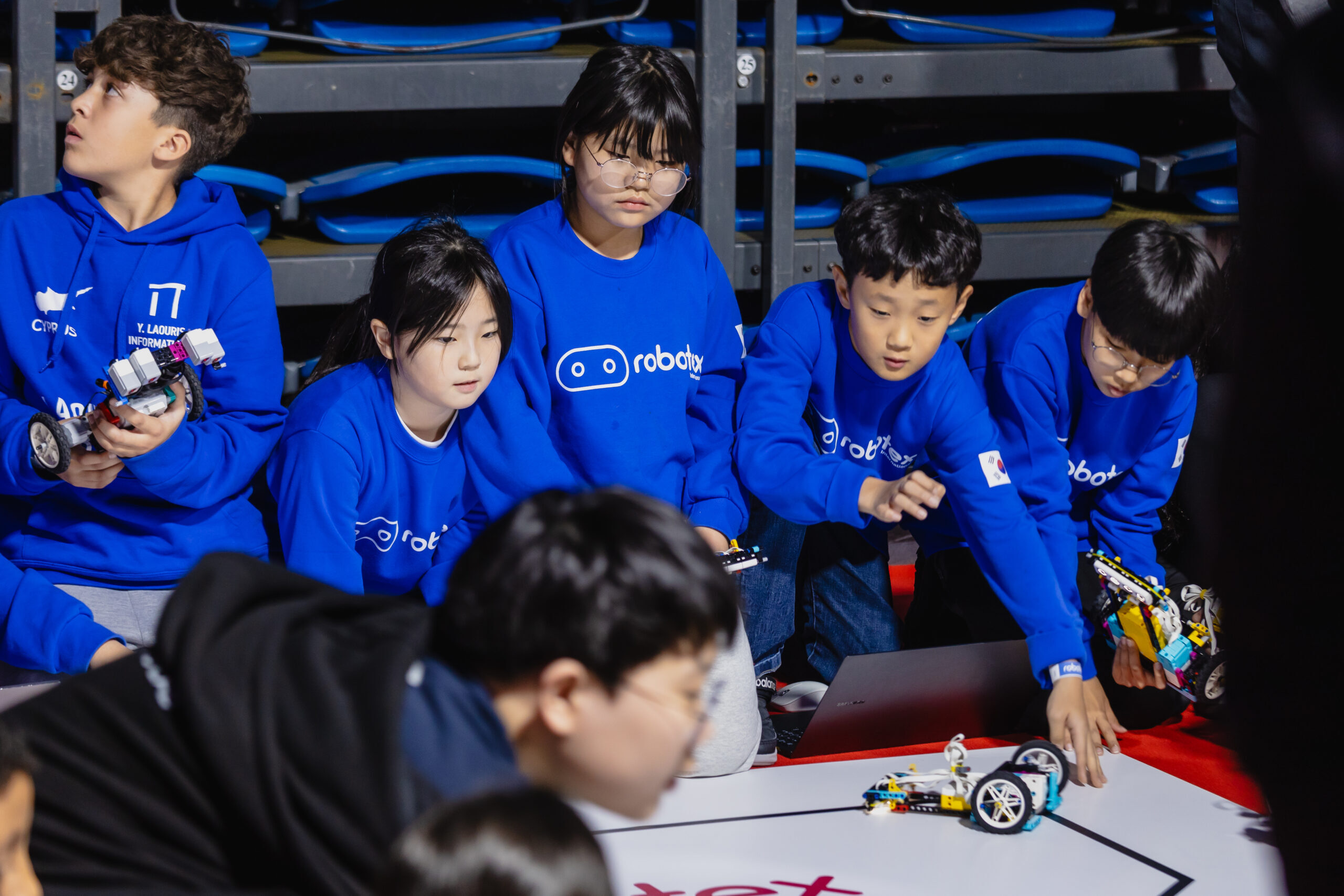
Team working on robot

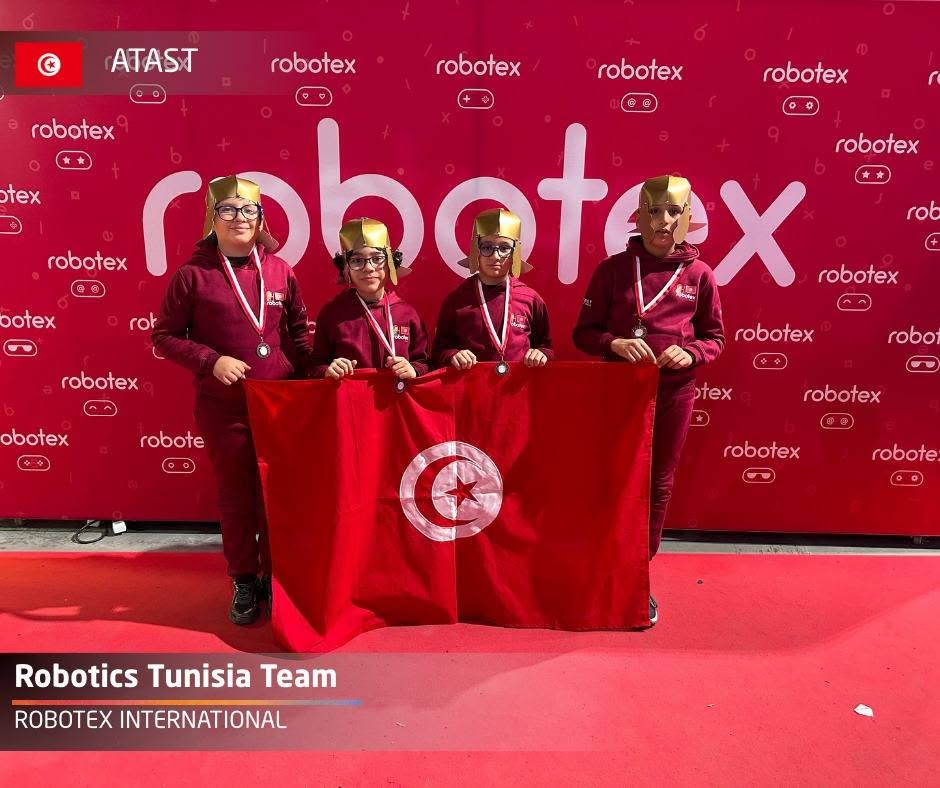
Our Teams on the World Stage

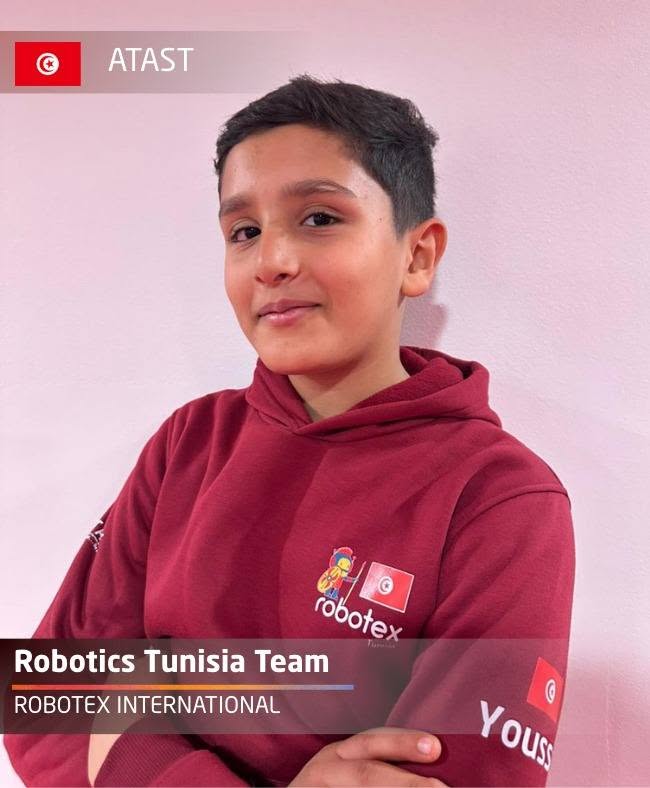
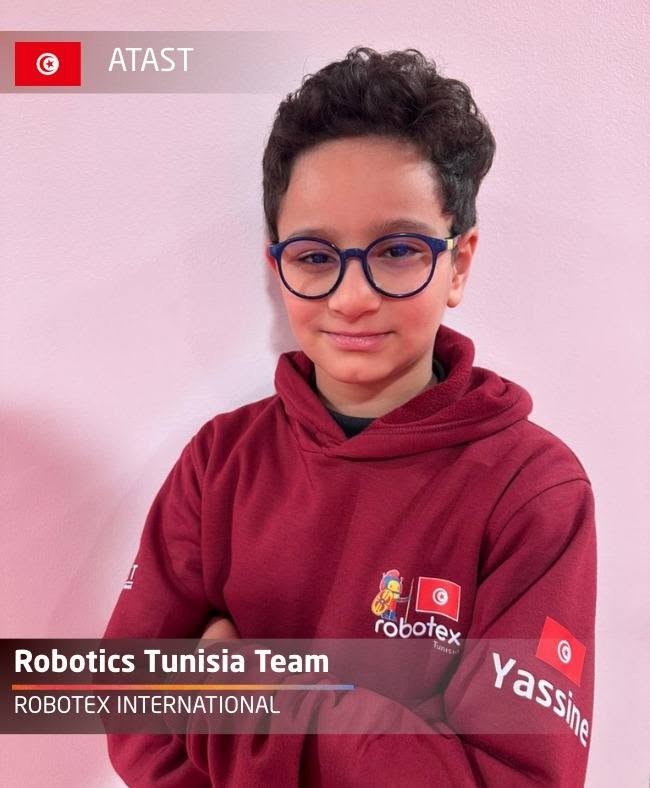
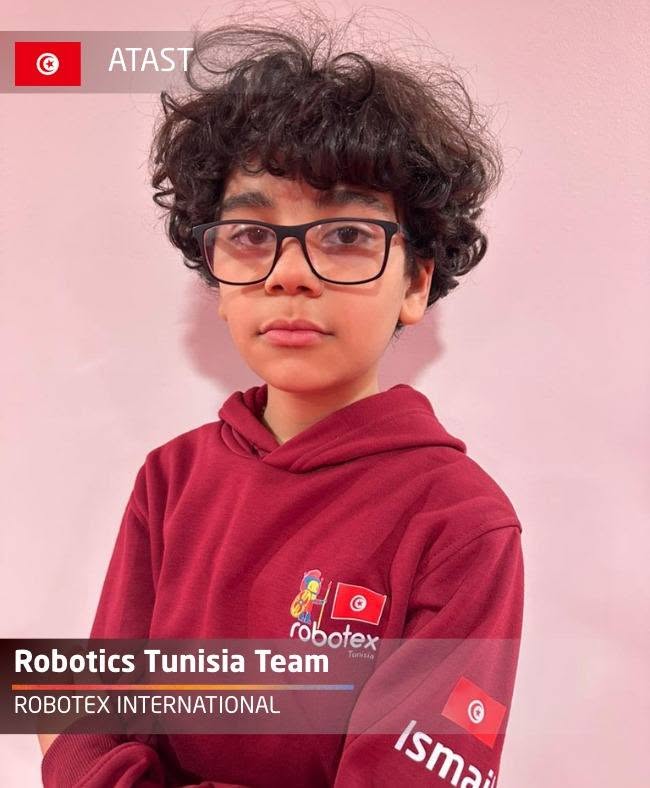
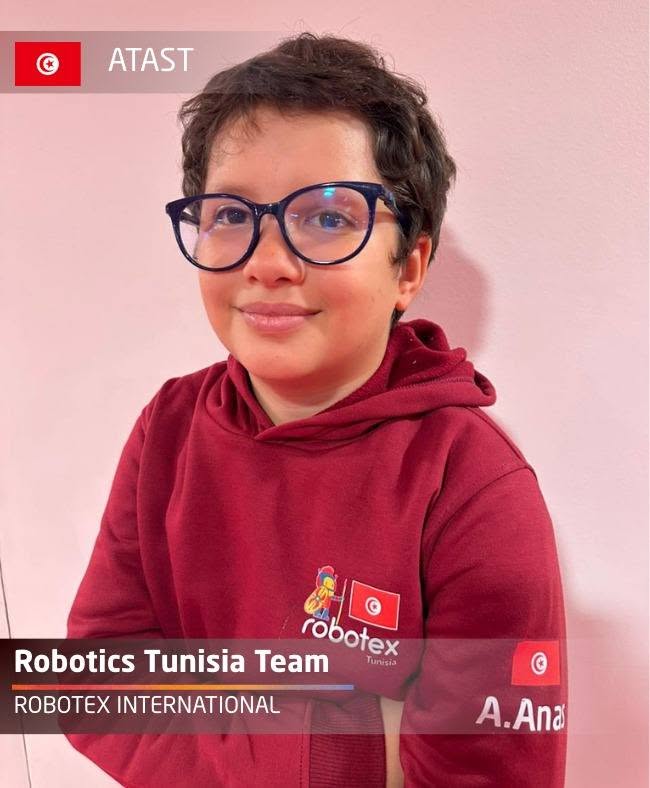
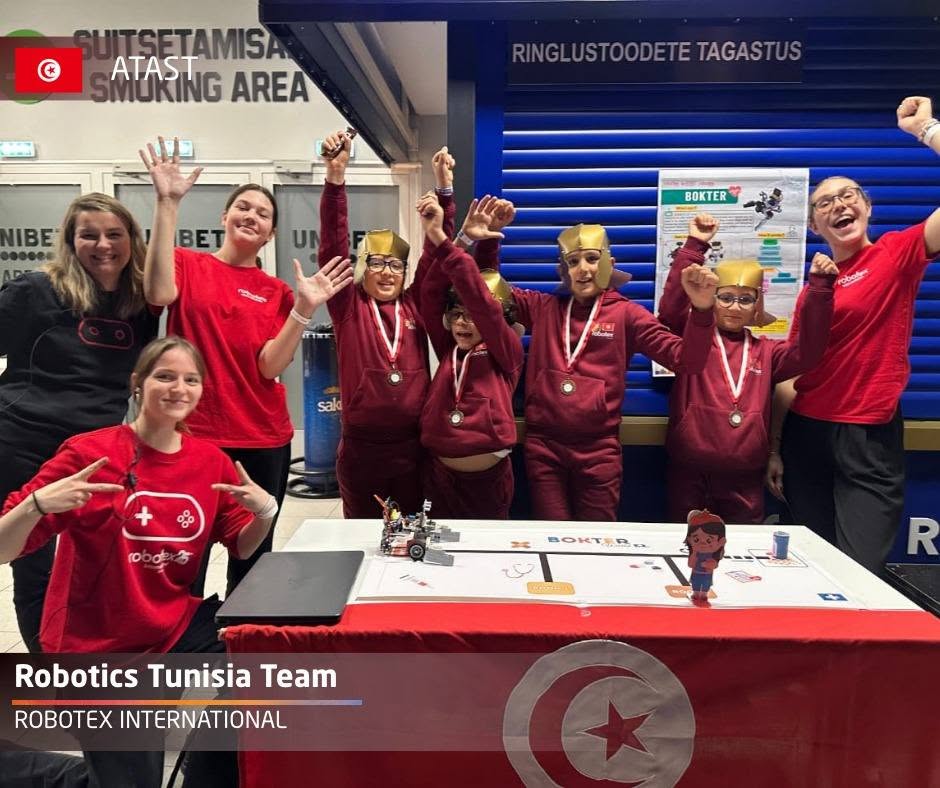
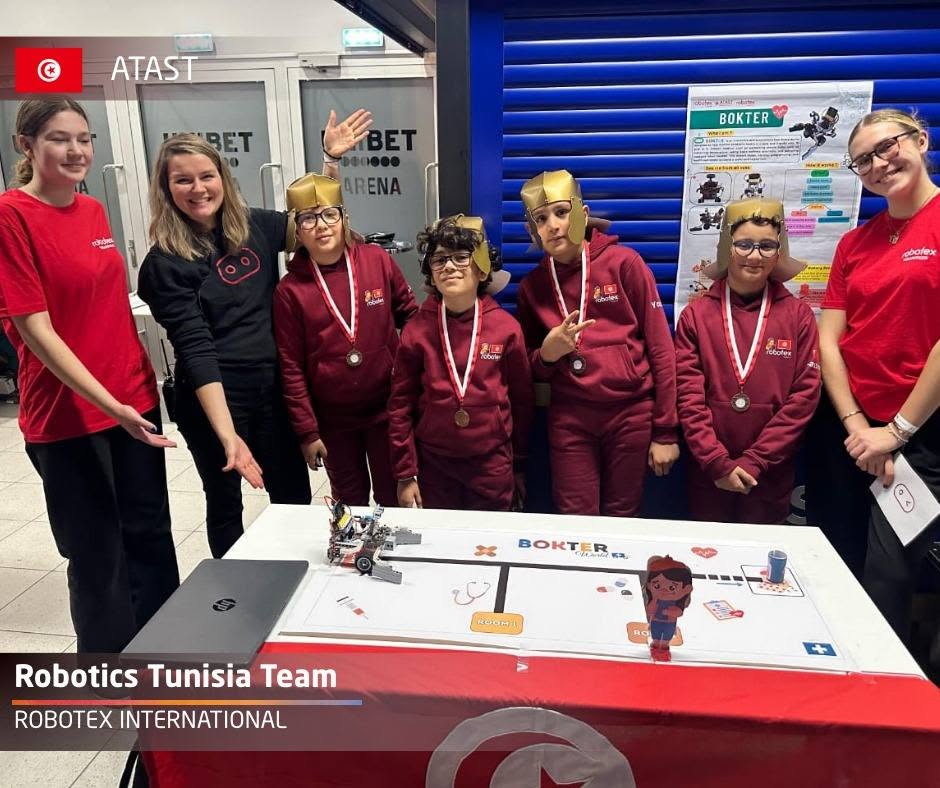
Team member Team member Team member Team member Tunisia team celebrating Tunisia team

Start Your Robotex Journey with ATAST

Whether you're a student ready to build your first autonomous robot or a school looking to start a programme — contact ATAST to join Tunisia's Robotex community.

Show Interest Robotex Official Site